
Key Takeaways
- Slowing down is not a sign of failure but a shift in how you grow. In personal growth, a slower pace often means you are no longer acting on habit or pressure. You are becoming more aware of your choices, which changes how and when you move forward.
- Discomfort during this phase has a purpose. The confusion, doubt, or loss of momentum you feel is not random. It comes from letting go of old patterns and making space for clearer thinking, better decisions, and a more aligned direction.
- You don’t need to rush your way out of this phase. Growth does not always show up as action or progress you can measure. Sometimes it shows up as pause, reflection, and recalibration. When you give yourself that space, you allow your next steps to come from clarity.
As an Amazon Associate, Shine Brightly earns from qualifying purchases. We may earn a small commission at no extra cost to you when you purchase through affiliate links on this site. Check out our affiliate link disclosure and transparency for more details.
Table of Contents
There are moments in personal growth when things stop moving the way they used to. You used to get things done faster. You had more drive, more clarity, and more direction. Now, even simple tasks feel heavier.
You pause more. You question more. And somewhere in the middle of that, a thought starts to creep in, “Am I falling behind?” It’s easy to compare yourself to others during this phase. You see people moving forward, reaching milestones, or staying consistent. Meanwhile, you feel like you’ve slowed down without a clear reason.
That gap can bring guilt. It can make you doubt your progress and even your discipline. But what if this slowdown is not a mistake? What if it’s not a sign that you’ve lost momentum, but a sign that something deeper is shifting?
Why Slowing Down Feels So Uncomfortable?

Slowing down does not just change your pace. It changes what you notice. When things move fast, it is easier to stay focused on tasks, goals, and outcomes. But when things slow down, your attention turns inward. That shift can feel unfamiliar and unsettling. The discomfort is not random. It comes from the way you were taught to measure progress and from the thoughts that surface when there is more space to think.
We’re Conditioned to Equate Speed with Success
From a young age, progress is often linked to movement. You move forward, you achieve, you stay productive. Speed becomes a signal that you are doing well. So when your pace changes, it can feel like something is wrong. Slowing down can feel like losing your edge or falling behind, even when that is not the case. This is not because slowing down is a problem. It is because your mind has been trained to see constant motion as proof of growth.
During the in-between stage of personal growth, that belief starts to shift. You begin to see that not all progress is visible or fast. Some of it happens in stillness, where you are processing, adjusting, and letting things settle before moving forward again.
Comparison Makes Stillness Feel Like Failure

It is hard to slow down when everyone else seems to be moving. You see people staying consistent, reaching goals, or pushing through challenges. In contrast, your slower pace can feel like a step back. That comparison creates pressure. It makes stillness feel like failure, even when your path requires a different rhythm.
But personal growth does not follow a shared timeline. What looks like progress on the outside does not always reflect what is happening internally. Your slower phase may be where you are building clarity, which is harder to see but just as important.
Silence Brings Up Thoughts We’ve Been Avoiding
When things slow down, there is less noise to distract you. Without constant activity, your thoughts become clearer. You start noticing doubts, questions, or feelings that were easy to ignore before. This can feel uncomfortable because it brings attention to things you have not fully processed. But this is also where growth deepens.
Instead of pushing those thoughts away, slowing down gives you a chance to understand them. It creates space to reflect, which is necessary if you want your next steps to come from clarity instead of habit.
6 Signs You’re Slowing Down for the Right Reasons
Not every slowdown means something is wrong. In many cases, it means your way of thinking is changing. You are no longer reacting the same way or chasing the same things. This shift can feel unfamiliar, but it often points to a more grounded form of personal growth.
The signs below show that your pace is changing for a reason, not by accident.
Sign #1: You Feel the Urge to Be More Intentional with Your Choices

The first sign is when you start to pause before saying yes. You think about what something will cost you in time, energy, or focus. Most importantly, you are no longer making decisions based on habit or pressure. Instead, you are paying attention to what feels right and what does not. That identity shift naturally slows you down because you are no longer acting on impulse. You are choosing with purpose.
Sign #2: You’re No Longer Chasing Everything at Once
Another sign is when you stop trying to keep up with every opportunity, idea, or expectation. Before, doing more felt like progress. Now, it feels like a distraction. You begin to see how spreading yourself thin leads to burnout and shallow results. So you start narrowing your focus. You choose a few things that matter and let the rest go. That decision creates space, but it also changes your pace.
Sign #3: You’re Questioning Urgency Itself
You start asking, “Does this really need to be done right now?” Things that once felt urgent begin to lose their pressure. You realize that urgency is often created by external expectations. This awareness changes how you respond. You take a step back instead of rushing forward. That shift helps you protect your time and energy. This is also a sign that you’re becoming your real self.
Sign #4: You Need More Time to Decide
You give yourself space before making choices. In the past, quick decisions may have felt efficient. Now, they can feel incomplete. You want to understand your options, your reasons, and the impact of your choices. This need for time reflects a deeper level of discernment. You are not avoiding decisions. You are making better ones.
Sign #5: You Feel Mentally or Emotionally “Full”
You reach a point where more input feels overwhelming. New ideas, advice, or information no longer feel helpful. They feel heavy. This is often a sign that you have taken in enough and need time to process. Slowing down becomes necessary because your mind and emotions need space to settle before you can move forward with clarity.
Sign #6: You’re Prioritizing Clarity Over Speed
Lastly, you care more about direction than how fast you move. You begin to see that moving quickly without clarity leads to misalignment. It creates more work in the long run. So you slow down to understand where you are going and why. This is one of the benefits of slowing down. Though the choice may look like a delay from the outside, it reflects a more intentional approach to personal growth.
How to Move Through This Phase Without Panicking
When your pace changes, it is easy to assume something is wrong. You may feel the urge to fix it, rush it, or push yourself back into your old rhythm. But this phase is not something to fight. It is something to understand. Moving through it requires less pressure and more awareness. Remember that the goal is not to force momentum, but to stay grounded while things become clearer.
Tip #1: Let Yourself Pause Without Labeling It as Failure
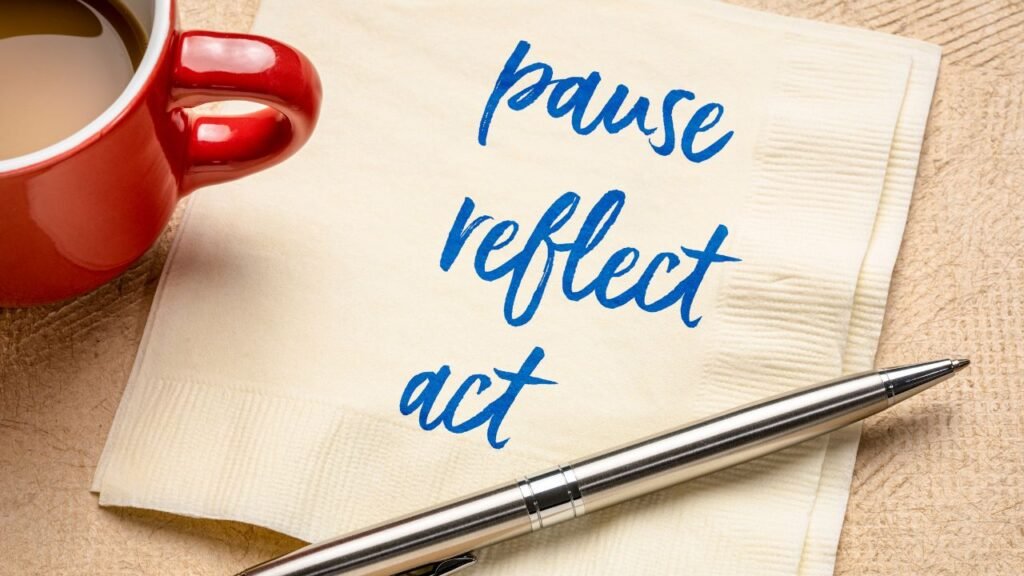
Bear in mind that not every pause needs to be explained or justified. The discomfort often comes from the label you attach to it. When you call it failure, it creates pressure to prove otherwise. When you see it as part of personal growth, the pressure softens. Be patient and kind to yourself because you are allowed to be where you are without rushing to change it. This does not mean giving up.
It means recognizing that not all progress looks active. Some of it looks like stepping back and allowing things to settle. This is where a guided reflection journal or daily mindset workbook can help you process this phase instead of overthinking it. It gives structure when life feels slow or unclear.
Tip #2: Focus On Clarity
Instead of asking how to move faster, ask what actually makes sense right now. When your direction feels unclear, speed will not help. It often leads to choices that you later question. Slowing down gives you space to understand what matters, what feels aligned, and what no longer fits. Clarity takes time because it requires honesty. But once it becomes clear, your next steps feel more stable and less forced.
Tip #3: Trust That Not All Progress Is Visible
A lot of what changes during personal growth happens internally. You may not see results right away, and that can make you feel stuck. But beneath that stillness, your mindset, priorities, and awareness are shifting. These changes shape how you will act moving forward.
During this transition, you will see signs of personal growth. Trusting this process helps you stay grounded. It reminds you that progress is not always something you can measure in the moment.
Tip #4: Stay Present Instead of Forcing Direction
You do not need to have everything figured out right now. Trying to force a clear path often creates more confusion. It pulls you away from what is actually happening in the present. By staying present, you will be able to notice small insights, shifts, and realizations as they come.
Direction becomes clearer when you stop forcing it. It forms gradually as you pay attention to what feels right and what no longer does. A mindfulness journal can help anchor your thoughts so you don’t spiral into overthinking during this phase.
You’re Not Falling Behind. You’re Slowing Down on Purpose
It’s easy to look at your current pace and think you’ve lost something. The drive, the momentum, the version of you that used to move faster and do more. But slowing down does not mean you’ve gone backward. It means something in you is changing.
You have to remember that personal growth is not only about moving forward. It is also about knowing when to pause, reflect, and stop repeating patterns that no longer fit. Yes, this phase may feel unfamiliar, but it often carries more intention than the pace you had before.
Also, bear in mind that you are not behind. You are simply adjusting. You are creating space to think more clearly, choose more carefully, and move in ways that actually align with who you are becoming. That kind of growth does not always look productive from the outside, but it is often the most important kind. So if things feel slower right now, let them be. Not everything that grows does so quickly. Some things grow right.
PS: If this article resonates with you, keep coming back to Shine Brightly for more gentle reminders, grounded insights, and support along your personal growth journey.