

Key Takeaways
- Slowing down is part of how real growth happens. In personal growth, a slower pace often means you are moving with more awareness instead of habit or pressure. It gives you space to notice what actually matters and to make choices that feel more aligned instead of rushed.
- The benefits of slowing down come from clarity. When life feels quieter, you start seeing patterns, emotions, and priorities more clearly. This is where deeper understanding forms, even if it does not look like progress on the outside. The benefits of slowing down are often internal before they become visible.
- You are not stuck when you slow down. You are integrating. Not every phase of growth is active or fast. Some phases are about processing, resetting, and rebuilding your direction. When you allow that space, you create more stable and sustainable personal growth over time.
As an Amazon Associate, Shine Brightly earns from qualifying purchases. We may earn a small commission at no extra cost to you when you purchase through affiliate links on this site. Check out our affiliate link disclosure and transparency for more details.
Table of Contents
Life today moves fast, and it rarely permits you to slow down. There’s always something that needs attention. A message to reply to. A task to finish. A goal to keep up with. It creates a constant sense that you should be doing more, even when you are already tired. Over time, this pace builds a quiet tension.
On one side, there’s the pressure to stay productive and keep moving forward. On the other hand, there’s exhaustion that you can’t ignore anymore. You try to balance both, but it often feels like you are falling short no matter what you choose. Because of this, slowing down can feel like losing ground, especially if you are in the in-between stage of personal growth.
It can feel like you are stepping away from progress while everyone else keeps moving. But that assumption is worth questioning. What if slowing down is not a loss at all? What if it is where you start to gain something you could not access while rushing?
Why We Resist Slowing Down

Slowing down sounds simple, but in real life, it often feels uncomfortable. That resistance does not come out of nowhere. It is shaped by how we understand success, progress, and even self-worth. When movement is constantly praised, stillness starts to feel suspicious. Because most of the time, we associate speed with success.
The faster you move, the more it looks like you are doing something right. This creates an internal pressure to keep going, even when your mind and body are already asking for rest. Slowing down during personal growth starts to feel like losing your edge, even if nothing about your direction has actually changed.
We also fear being left behind. It is easy to look around and feel like everyone else is progressing while you pause. That comparison creates urgency. Not because your path is wrong, but because you assume timing should look the same for everyone.
Another layer is how we mistake stillness for stagnation. When nothing visible is changing, it feels like nothing is happening at all. But a lot of internal processing does not show up immediately. Stillness can feel empty, even when something important is forming underneath it.
On top of that, there is cultural conditioning that reinforces all of this. We are constantly told to improve, optimize, and keep moving forward. That’s why rest is often treated like a break from progress instead of part of it. Over time, this creates the belief that slowing down is something you have to justify.
All of this resistance makes sense. But it also sets the stage for a different perspective, where slowing down is not the opposite of growth, but part of how it actually happens.
7 Hidden Benefits of Slowing Down
When you remove constant pressure to move fast, something changes. You start noticing parts of your life and mind that were always there but easy to miss in the rush. But what we failed to realize is that slowing down does not remove progress. It changes the kind of progress you experience. Instead of surface-level movement, you start building something more stable, clear, and lasting.
Benefit #1: You Make Better, More Aligned Decisions
When you slow down, your decisions stop coming from urgency. You are less reactive, which means you are not just responding to pressure or emotion in the moment. You give yourself space to think, and that space changes the quality of your choices. Impulsive decisions lose their pull because you are no longer trying to escape discomfort or keep up with speed.
With more room to reflect, your judgment improves. You start choosing based on alignment instead of not pressure. A simple journaling practice can make this reflection more grounded and consistent. A guided journal or a simple notebook can help you externalize thoughts, track patterns, and notice internal shifts more clearly.
Benefit #2: You Reconnect with Yourself

Slowing down brings your attention back inward. You begin to hear your own thoughts more clearly without constant distraction. This is especially beneficial when you are finding meaning in your life. Over time, you start noticing what you actually want instead of what you think you should want.
That difference matters. As external noise quiets, internal clarity starts to return. You are no longer just reacting to life. You are understanding yourself again.
Benefit #3: You Break Out of Autopilot Living
When everything moves fast, it is easy to live in default mode. Slowing down interrupts that pattern. Daily routines become more intentional instead of automatic. You start making conscious choices instead of repeating habits without thought.
This identity shift makes life feel more present. You are no longer just going through the motions. You are actually aware of them. It also helps reduce burnout cycles that come from constantly operating without pause.
Benefit #4: You Notice What Was Always Overlooked
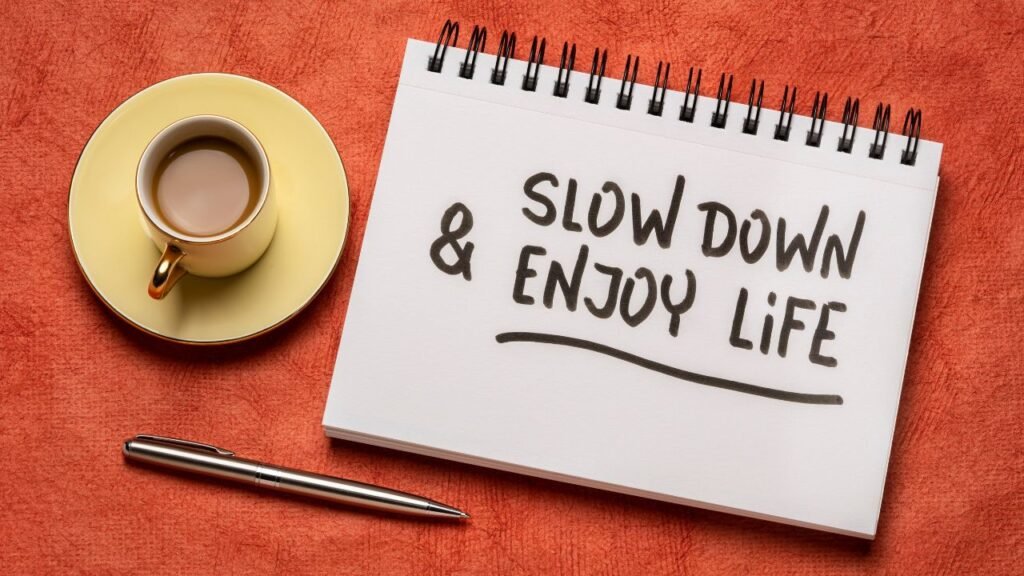
Speed makes life blur. Slowness brings it back into focus. Small moments start to matter again. Simple routines feel more grounding. Relationships feel more present because you are not mentally elsewhere all the time.
You also start appreciating simplicity. Things do not need to be intense or constant to feel meaningful. A slow living or gratitude journal can help you actively train your attention back to the present. Writing even a few lines daily helps you notice what you would normally overlook in a fast-paced routine.
Benefit #5: You Recover Emotionally and Mentally
Constant movement keeps your system in a state of tension. When you slow down, that pressure starts to ease. You give your mind and body space to recover instead of constantly pushing forward. Emotional clarity also improves because you are not overloaded with stimulation and expectation.
This is not about doing nothing. It is about giving yourself enough space to feel stable again, especially when you’re navigating a personal development phase. Simple comfort-based items like a weighted blanket or an aromatherapy diffuser can help signal safety to your nervous system. These small environmental shifts can make rest feel more intentional and restorative.
Benefit #6: You Build Self-Trust
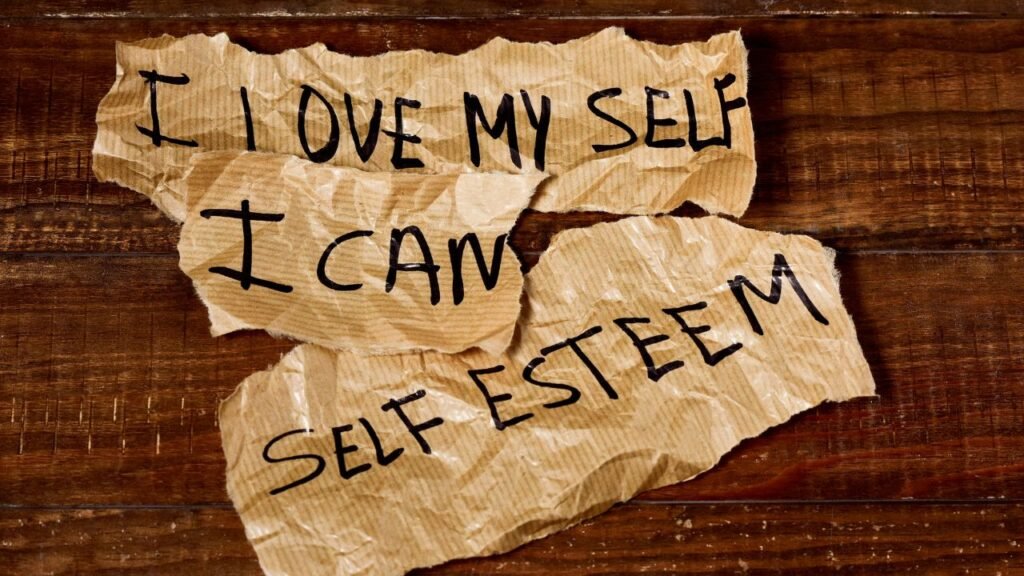
Slowing down helps you rely on your own judgment again. Instead of rushing into decisions or constantly seeking outside validation, you start listening to yourself more. Each time you pause and choose carefully, you reinforce the idea that you can trust your own process. As time goes by, this builds confidence that is not dependent on speed or external approval.
A decision journal or habit tracker can help you see how your choices evolve. It reinforces self-trust by showing you patterns of good judgment you might otherwise overlook in daily life.
Benefit#7: You Build Sustainable Growth
Fast growth often burns out quickly. Slow growth lasts longer. When you slow down, your habits, mindset, and direction have time to settle. This reduces the cycle of intense effort followed by exhaustion and starting over again.
What you build becomes more stable. Your identity, routines, and progress feel less fragile because they are not driven by urgency. They are built with intention.
Slowing Down Isn’t Losing Time. It’s Gaining Depth
It is easy to look at your slower seasons and assume something is off. When life is not moving at the pace you are used to, it can feel like you are falling behind or missing your chance to grow. But slowing down is not a step backward. It is a sign you’re searching for meaning in your life, and your growth is happening.
Remember that not all progress is visible. Some of it happens in how you think, respond, and relate to yourself. Slowing down gives those changes space to settle. It allows you to move from reaction to awareness, from urgency to intention, from noise to clarity.
This is not regression. It is realignment. You are not losing time. You are building a stronger foundation for what comes next. Some seasons aren’t meant for acceleration. They’re meant for alignment.
PS: If this article resonates with you, keep coming back to Shine Brightly for more gentle reminders, grounded insights, and support along your personal growth journey.