
Key Takeaways
- Personal growth often happens in quiet, almost invisible ways. Even if nothing seems to change on the outside, subtle shifts in how you think, feel, or respond are signs that progress is happening.
- As you move out of the in-between stage, you may notice your emotions feel steadier, your curiosity returns without pressure, and making decisions becomes calmer. These are all signs that your inner alignment is strengthening.
- Patience, self-trust, and compassion are essential companions during this stage. Sitting with uncertainty, honoring small changes, and reflecting on your experiences helps you grow into the next version of yourself.
Table of Contents
A few years ago, someone I worked with told me, “Nothing is wrong, but nothing feels right either.”
On paper, his life looked stable.
A steady job. A routine he had built carefully over the years.
The kind of success he once worked hard to achieve.
Yet something inside him felt finished.
That moment matters.
There is a moment in personal growth when life starts to feel unfamiliar, even though nothing looks broken on the outside.
The routines you once trusted feel off.
The goals you worked toward no longer excite you.
You may catch yourself thinking, “This used to feel right. Why doesn’t it anymore?”
That disconnect can feel confusing and unsettling, especially when you cannot explain it to anyone else.
This stage often carries quiet grief.
You may miss the version of yourself who felt certain.
You may mourn relationships, dreams, or roles that once gave you a sense of belonging.
Confusion can sit beside that grief. So can loss, even when you know growth is happening.
This in-between stage of personal growth is not a sign that something went wrong.
It is a necessary pause.
It is the space where old layers fall away so something more aligned can take shape.
You are not stuck. You are in the middle of becoming.
Understanding this stage can help you make sense of what you are feeling and show you how to move forward with more trust and clarity.
What is the In-Between Stage of Personal Growth?
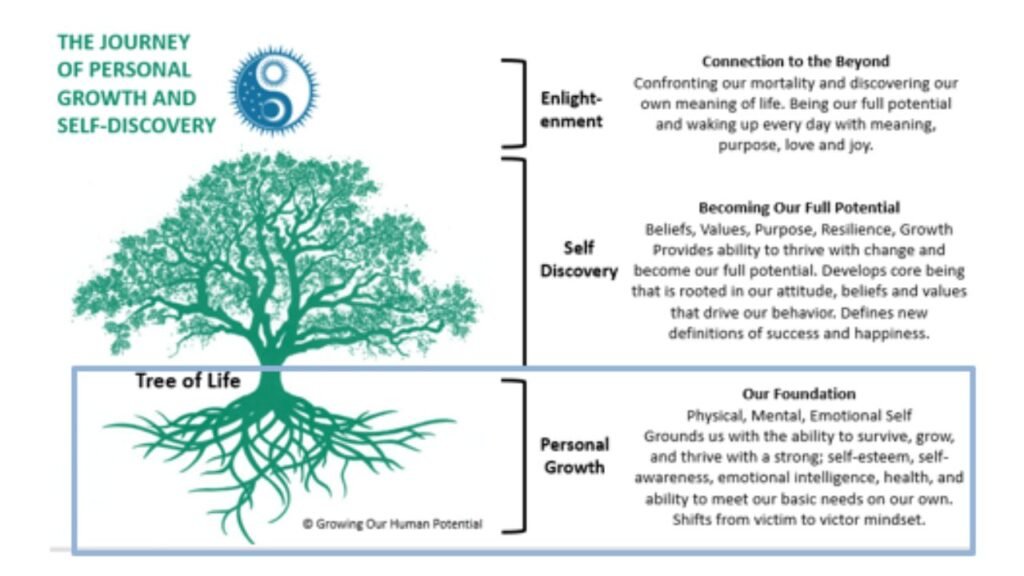
The in-between stage of personal growth is the period after awareness changes but before life catches up.
You begin to see yourself, your values, and your needs with more honesty.
What once felt normal starts to feel misaligned.
At the same time, the next version of your life has not taken shape.
This creates a sense of being suspended between what was and what will be.
This stage feels uncomfortable because clarity has not arrived yet.
Goals that once motivated you lose their pull, and roles that once fit start to feel tight.
That discomfort is not a sign that you are lost. It is a signal that growth is underway.
The in-between phase strips away autopilot living and invites reflection.
It slows you down so you can choose your next steps with intention instead of habit.
Many people try to escape this part of personal growth by forcing decisions or chasing certainty.
That pressure often adds stress. The in-between stage is not meant to be rushed.
It is meant to be held. This is where deeper self-trust forms.
It is where alignment begins, even before direction becomes clear.
Why This Phase Feels So Lonely and Unsettling?
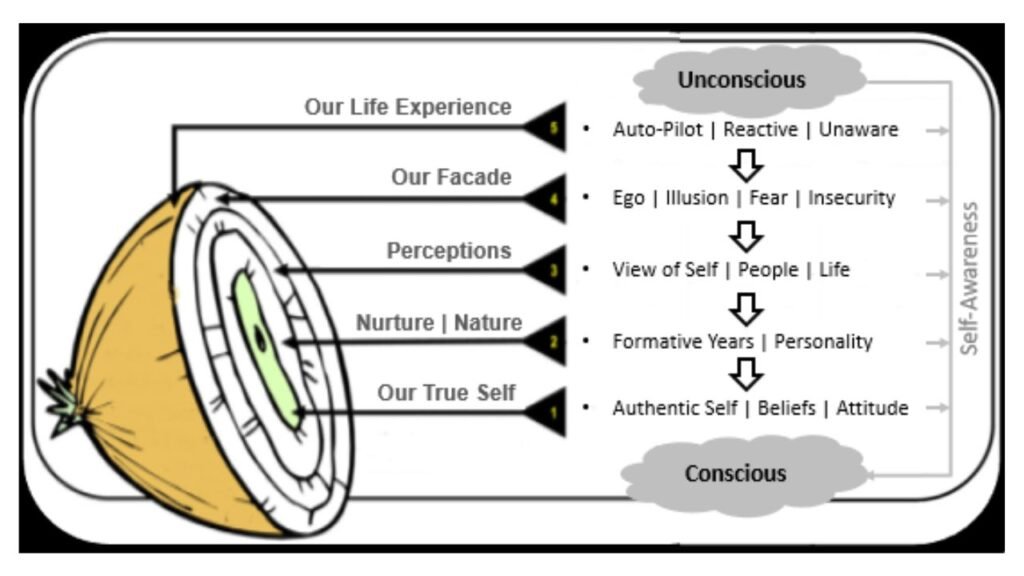
As personal growth deepens, the life you built from an earlier version of yourself can begin to feel off.
And one reason this stage feels disorienting is that your internal story about who you are begins to break down.
For years, your decisions may have followed a familiar narrative: who you were supposed to become, what success meant, what kind of life made sense.
When that narrative loosens, the mind experiences a kind of temporary identity gap.
You no longer fully believe the old story, but the next one has not formed yet.
You must understand why this happens so you can respond with compassion instead of self-doubt.
Identity No Longer Matches Inner Values
One reason this phase feels unsettling is that your outer identity no longer reflects what matters to you inside.
This is perfectly normal and common, especially when you are in the first stage of identity shift.
You may still carry the same title, role, or routine, yet it feels borrowed instead of true.
For example, a career you once felt proud of may now feel misaligned with your values around meaning or impact.
Social labels can also feel heavy when they no longer match who you are becoming.
This gap between who you appear to be and who you feel yourself becoming can create deep inner isolation.
Old Goals Feel Empty Instead of Motivating
Goals that once fueled you can lose their pull during personal growth.
Achievements may still look impressive, but they no longer bring satisfaction.
This often happens when goals are shaped by external approval or outdated priorities.
You might reach milestones and feel nothing afterward.
That emptiness signals a need for goals that reflect who you are now… not who you felt you had to be before.
Others May Not Understand Your Internal Shift
Inner change often goes unnoticed by others.
During personal growth, you may struggle to explain why you feel different.
Friends or family may encourage you to stay the same or move on faster.
This can create distance, even in close relationships.
Feeling unseen can deepen the sense of loneliness, especially when your experience feels real but hard to put into words.
Relationships May Feel Misaligned or Draining
As personal growth changes how you see yourself, it can also shift how you experience relationships.
Conversations may feel surface-level.
Dynamics that once felt easy may feel draining.
But this does not mean the relationship failed.
It only means the connection no longer meets your current emotional or values-based needs.
For example, friendships built on shared habits may struggle when you seek deeper connection and honesty.
Comfort Starts to Feel Restrictive
Comfort often signals safety, but during personal growth, it can start to feel limiting.
Familiar routines may create a sense of stagnation.
Predictable environments may feel confining instead of calming.
You may feel restless even in places that once brought peace.
This tension reflects an inner readiness for expansion, even before you know what that expansion looks like.
Growth Often Requires Temporary Solitude
Periods of personal growth often call for space.
Not isolation as punishment, but solitude as support.
Time alone allows reflection and honesty.
It helps you hear your own needs without outside noise.
This solitude can feel uncomfortable, yet it often becomes the place where clarity and self-trust begin to rebuild.
Common Signs You’re in the In-Between (and Not “Stuck”)

During personal growth, it can be hard to tell the difference between being stuck and being in transition.
This stage often lacks clear markers of progress, which can lead to self-doubt.
Growth may feel quiet instead of exciting.
Movement may happen internally rather than through visible change.
Here are the common signs that can help you recognize and trust that something meaningful is unfolding.
Loss of Motivation for Old Ambitions
A common sign of personal growth is losing interest in goals that once drove you.
This can feel alarming, especially if those ambitions shaped your identity.
You may still achieve results, yet the energy behind them fades.
For example, a career goal that once felt fulfilling may now feel disconnected from your sense of purpose.
This loss of motivation signals a shift in values, not a lack of discipline.
It is also a sign that you are searching meaning in your life, even if you are not yet aware of it.
Heightened Self-Awareness and Sensitivity
As personal growth deepens, awareness increases.
You may notice emotional reactions more clearly.
You may also sense when something feels off, even in small moments.
This sensitivity can feel heavy, but it reflects a stronger connection to yourself.
Many people experience this as a period of honesty that makes it harder to ignore misalignment.
Desire for Meaning without Clear Direction
This phase of personal growth often brings a strong pull toward the search for meaning in life.
You want depth, purpose, and alignment.
At the same time, the direction feels unclear. You may know what you do not want without knowing what you want instead.
This gap can feel frustrating, yet it shows that surface-level goals no longer satisfy you.
Pull Toward Simplicity, Quiet, Or Withdrawal
A desire to slow down is another sign of personal growth.
You may crave quiet instead of constant stimulation.
Social plans may also feel draining. Time alone may feel restorative.
This pull toward simplicity allows space for reflection and integration, even when it looks like withdrawal from the outside.
Resistance to Making Long-Term Commitments
Long-term decisions can feel heavy during personal growth.
You may hesitate to lock yourself into plans, roles, or paths.
This resistance does not mean indecision.
It reflects awareness that your direction is still forming.
Many people pause commitments because they want future choices to align with who they are becoming.
What Not to Do During the In-Between Stage
The in-between stage of personal growth can feel uncomfortable, which makes it tempting to escape the feeling instead of sitting with it.
Many people try to fix the discomfort as fast as possible. That urge is understandable.
Yet some responses create more confusion and exhaustion over time.
Knowing what to avoid can help you protect your energy and allow growth to unfold with more trust.
Don’t Rush Clarity to Escape Discomfort
Rushing clarity often comes from a need to end the unease as fast as possible.
When discomfort shows up, the mind looks for answers, labels, or decisions just to feel safe again.
The problem is that fast clarity is often borrowed instead of earned.
It can push you into paths that look right on paper but feel wrong later.
During the in-between stage, clarity grows through reflection and time.
It’s always important that you give yourself space to sit with open questions.
Write what feels uncertain without trying to solve it.
Limit advice overload from others.
For example, choosing a new career path just to stop feeling lost can lead to another restart later.
Let clarity arrive through lived experience instead of fear.
Don’t Force A New Identity Prematurely
It can feel tempting to reinvent yourself the moment the old version no longer fits.
Titles, roles, and labels can feel like armor during uncertain times.
But forcing a new identity too soon often hides unfinished lessons from the last chapter.
Personal growth happens when you allow yourself to be undefined for a while.
That space helps you see what parts of you are real and what parts were survival tools.
One of the things to avoid this is to focus on values instead of labels.
Notice what still matters to you each day.
Try new interests without naming them as your future.
For example, calling yourself a new entrepreneur before you understand why you left your last role can create pressure instead of freedom.
Don’t Numb the Uncertainty with Over-Productivity
Staying busy can feel like progress, but it often works as a distraction.
Over-productivity can block the feelings that are meant to guide your next step.
Filling every moment with tasks leaves no room for insight.
You don’t need constant motion. Growth needs pauses.
When productivity becomes avoidance, it leads to burnout instead of clarity.
To avoid this trap, notice why you stay busy.
Build rest into your routine without guilt. Choose tasks that support learning.
For example, taking on extra projects to avoid thinking about a life change can delay honest decisions.
Don’t Compare Your Timeline to Others
Comparison can shrink your trust in your own process.
Everyone enters the in-between stage for different reasons and at different times.
Looking at others can create pressure to rush milestones that are not yours yet.
Personal growth follows seasons. And your pace reflects your experiences.
If you feel like you are always comparing your life to others, limit your time on platforms that trigger it.
Focus on progress you can feel. Remember that progress is not something you can flex or show off.
It’s also helpful to track small internal shifts like stronger boundaries or clearer values.
For example, seeing peers settle into careers while you pause does not mean you are behind.
It often means you are listening more closely to yourself.
How to Support Yourself while You’re Here
The in-between stage of personal growth can feel quiet, confusing, and heavy all at once.
You may sense that something inside you is changing, even if nothing outside looks different yet.
This phase asks less from your productivity and more from your presence.
Supporting yourself while you’re in this phase is essential so you can stay grounded while you grow into your next self.
Focus on Self-Regulation
Focusing on self-regulation helps you stay steady while your inner world shifts.
During periods of deep inner change, emotions can rise quickly because old patterns are loosening and new ones are not fully formed yet.
Self-regulation matters because it gives your nervous system a sense of safety when life feels uncertain.
Instead of pushing those feelings away, pause and meet them.
Simple practices can help.
When emotions spike, your nervous system is often reacting to uncertainty rather than danger.
Slowing your breathing can signal to your body that the moment is survivable, even if the future still feels unclear.
For example, if you feel overwhelmed after a hard conversation, pause, place a hand on your chest, and breathe slowly.
Remind yourself that strong feelings do not mean something is wrong with you.
Create Your Safe Space
Creating your safe space gives you a place where you can rest from expectations.
In the in-between stage of personal growth, you need areas where you do not have to explain, perform, or stay strong.
A safe space helps your mind and body relax so growth can happen without pressure.
This space can be physical, like a quiet corner with soft light.
Or emotional, like a journal or a trusted friend.
You might set one small rule, such as no problem-solving in this space, only honesty and rest.
Practice Observing Instead of Fixing
Practicing observing instead of fixing allows you to understand yourself without rushing change.
During personal growth, the urge to fix often comes from discomfort or fear.
Observing matters because it builds self-trust and patience in the in-between stage.
You can start by noticing patterns, thoughts, or reactions and asking, “What is this trying to tell me?” rather than “How do I stop this?”
For example, if you feel unmotivated, observe when it shows up and what it protects you from, instead of pushing yourself harder.
Build Routines that Support Nervous System Safety
Building routines that support nervous system safety helps your body feel grounded while your identity shifts during personal growth.
Personal growth can feel unstable, so steady routines act like anchors.
These routines matter because safety creates space for healing and learning in the in-between stage.
You can try gentle habits like waking up at the same time, stepping outside each morning, or eating regular meals.
One example is a short evening routine where you stretch, write one honest thought, and turn off screens before sleep.
Choose Alignment Over Urgency
Choosing alignment over urgency protects your energy during personal growth.
Urgency often pushes you to act from fear, comparison, or pressure to catch up.
Alignment matters because the in-between stage asks for choices that match your values, not your anxiety.
You can pause before decisions and ask, “Does this support who I am becoming?”
A simple example is saying no to an opportunity that looks impressive but drains you, and choosing rest or learning instead.
How to Know When You’re Moving Out of the In-Between
Sometimes personal growth doesn’t happen in big, dramatic moments.
There’s a period where you feel stuck, unsure, or in-between, and it can be hard to tell if you’re moving forward.
The truth is, progress often shows up in quiet ways that you might almost miss.
Recognizing these subtle signs can help you trust that the shift is happening, even when it doesn’t feel obvious.
Here are some ways to tell you’re moving out of the in-between stage.
You’ll Experience Subtle Clarity Instead of Dramatic Breakthroughs
When you start moving out of the in-between, clarity comes in pieces instead of a sudden “aha” moment.
You may notice that decisions feel easier, thoughts line up naturally, or certain patterns in your life make more sense.
Subtle clarity matters because it signals your mind and heart are aligning with your personal growth.
Pay attention to small realizations. These could be a feeling of understanding a past choice, or suddenly seeing a solution that didn’t occur to you before.
Journaling or reflecting each day can help you recognize these gentle shifts.
Your Emotional Steadiness will Increase
In the in-between stage, emotions often swing wildly with small triggers.
As you move forward, you notice a steadiness emerging, even in challenging situations.
This emotional balance is crucial because it allows you to respond rather than react.
You can recognize this when setbacks don’t derail you. Or when difficult conversations leave you calmer than before.
Practices like mindfulness, checking in with your feelings, and pausing before responding reinforce this steadiness.
Your Curiosity Returns without Pressure
Personal growth often pauses curiosity under the weight of doubt or fear.
Moving out of the in-between brings back a genuine interest in exploring life, ideas, and possibilities without feeling forced.
This return of curiosity is important because it signals that your confidence and openness are growing.
You’ll notice it in simple ways: reading a book because it excites you, trying a hobby you once abandoned, or asking questions just for the joy of learning.
Let these small sparks guide you, rather than pushing yourself to explore everything at once.
You’ll Feel Calmer When Making Choices
Decisions that once felt heavy or intimidating start to feel manageable.
Feeling calmer when making choices shows that your intuition and experience are beginning to lead your personal growth.
You may notice that weighing options no longer exhausts you, and that you trust yourself to pick what aligns with your values.
Try observing how you make small choices, like planning your day or responding to invitations.
Notice also the ease with which clarity appears.
The more you practice trusting these instincts, the more confident you’ll become in bigger decisions.
Find the Meaning in the In-Between Stage of Personal Growth
The in-between stage may feel long, confusing, or even lonely.
But it is not wasted time.
Every pause, every moment of uncertainty, and every small shift inside you is part of the work of becoming.
Personal growth often happens quietly, long before the changes show up in your life.
Values realign, instincts sharpen, and emotional steadiness returns.
Trust yourself, be patient, and treat yourself with compassion.
This period is shaping the foundation for clarity, purpose, and alignment.
This stage ends, and when it does, you’ll see that every subtle step mattered.
Take a breath and notice: what is one small way you’ve changed internally, even if no one else sees it?
What does it feel like to honor that shift without rushing the next step?
Sit with these moments of becoming. They are your guideposts.
Remember that the in-between stage rarely announces its purpose while you’re inside it.
Only later do people realize it was the quiet turning point where their life began to change direction.
PS: If this article resonates with you, keep coming back to Shine Brightly for more gentle reminders, grounded insights, and support along your personal growth journey.