
Key Takeaways
- Feeling a little lost, uncertain, or like parts of yourself are quietly slipping away is normal during an identity shift. This in-between space can feel strange, but it’s actually where your inner world is making room for the person you’re meant to become.
- Rebuilding your identity is a gentle, intentional process. It’s important to notice what feels true to you, practice habits that reflect your emerging self, surround yourself with people who support your growth, and honor the parts of your past that helped you get here.
- Patience, self-compassion, and reflection are your allies. Every small choice, boundary, or insight is shaping a deeper, more authentic, and resilient version of you. Trust the process. The self you’re becoming is quietly, beautifully waiting to meet you.
Table of Contents
Have you ever felt like the person you used to be is slowly disappearing?
Not in a dramatic way, but in quiet, confusing ways that show up in everyday moments.
You might sit with friends and notice the conversation no longer excites you.
You might scroll through things you once enjoyed and feel nothing.
The habits, interests, and routines that once felt normal start to feel out of place.
Then a thought appears that you can’t ignore.
What is happening to me?
This is something many people experience during personal growth.
The old version of you begins to fade, yet the new version has not taken full shape.
Yes, it can feel strange. One part of you knows you have changed.
Another part still tries to hold on to what once felt familiar.
Many people call this the in-between stage of personal growth.
You are no longer the person you used to be. But, at the same time, you have not stepped into the person you will become.
It can feel like standing in the middle of a bridge.
The place you came from sits behind you. The place ahead still feels unclear.
This space can bring doubt. It can also raise deep questions about your life, your values, and the direction you want to take.
If you feel lost during this phase, you are not alone.
Many people pass through this quiet identity shift during personal growth.
You might feel unsure, or even a little lost, and that’s normal.
As you read on, you’ll start to understand what’s happening and discover what steps to take next.
What Does an Identity Shift Actually Mean?

Many don’t realize that identity shift is more than personality.
It’s not just the habits, quirks, or traits that others notice.
Instead, it’s the quiet framework that shapes how you see yourself and how you move through the world.
It’s a combination of your beliefs, self-image, the roles you play, the ways you cope with stress, and the values that quietly guide your choices.
All these pieces come together to create a version of you that feels familiar, steady, and safe.
When you grow, some of these pieces begin to feel out of place.
For example, a belief you’ve carried for years may suddenly feel wrong.
A role you once played with ease may now feel restrictive.
Sometimes, even coping mechanisms that used to protect you might feel heavy or clumsy.
All these are normal because growth forces your identity to update, and during the shift, the old version of you can’t survive the process.
That’s why an identity shift during personal growth feels unsettling.
The old version of yourself that was once your safety net, and on which you relied, is starting to disappear.
When it begins to unravel, life can feel unpredictable and even a little frightening.
Yet this unease is part of the process.
It’s a sign that your inner structure is making room for something bigger and something truer.
Growth asks you to confront old assumptions, re-examine your values, and sometimes grieve the person you once were.
It’s uncomfortable, but it’s necessary.
So don’t be afraid.
Without this shift, the self you are becoming could never fully emerge.
Why Identity Shifts Happen During Personal Growth?
An identity shift during personal growth doesn’t happen randomly.
It’s the result of big changes in how you live, think, and feel.
Your inner world is updating to match the person you are becoming, even if it feels uncomfortable at first.
Here are some of the reasons why identity shifts happen during personal growth:
You Outgrow Survival Mode

One of the first signs of an identity shift is that you stop living just to survive other people’s expectations.
You stop trying to please everyone.
You stop tolerating disrespect.
And you stop seeking validation in places that once mattered.
For example, you might notice that you no longer bend over backward to make a friend happy when it drains you.
You might speak up when someone crosses a boundary that you once ignored.
It feels like waking up from autopilot, and it can be disturbing.
But it’s proof that your identity is becoming stronger and more aligned with your true self.
Your Nervous System Adjusts
The second reason is that growth often comes with healing.
Once you are healed, your reaction changes.
It is because old triggers may no longer control you.
You start noticing what feels safe and what doesn’t.
Most importantly, you adjust your boundaries naturally without forcing yourself to be someone you’re not.
Imagine a conversation that would have once left you anxious or defensive.
Now, you respond calmly or remove yourself from the situation.
It usually happens because your nervous system is learning that you no longer need to survive through tension, fear, or constant vigilance.
This shift quietly reshapes how you relate to the world.
Your Values Evolve
As you grow, what matters to you begins to change.
You stop chasing the things you once thought defined success.
You may no longer feel drawn to the lifestyle, the career, or even the relationships that once consumed your energy.
It can feel strange at first, like losing a compass you relied on.
But it’s also liberating, especially when you are finding meaning in life.
Your values are updating to match who you are becoming, and your identity must follow.
You Stop Performing
A profound part of this shift is that you stop performing for the approval of others.
You stop wearing masks just to fit in.
Instead, you start living more honestly, guided by your own sense of self.
You might notice yourself saying what you really think, choosing what genuinely excites you, and letting go of roles that no longer feel authentic.
The old version of you that performed for safety slowly fades.
This evolution isn’t abrupt. It’s a quiet realignment.
Your identity has to catch up with the new priorities forming inside you.
You start to act now in ways that reflect who you truly are rather than who you used to be.
Why Identity Shifts Can Feel Like Losing Yourself
Most of the time, when you’re experiencing identity shifts, you may feel like you’re not making any progress.
You’re always confused, lost, and don’t know what to do.
You may also feel like some pieces of yourself are quietly slipping away.
And that’s perfectly normal because it’s more than just change.
During this period of your life, your inner world is updating and making room for the person you are meant to become.
You’re Shedding Emotional Attachments
One reason identity shifts can feel like losing yourself is that you’re shedding emotional attachments.
As mentioned earlier, those habits, coping strategies, and roles that once helped you survive or made life feel manageable may start to feel heavy, unnecessary, or even restricting.
It’s common because growth is asking you to release what no longer serves you.
And letting go can feel like leaving behind tools you’ve relied on for years, even if they no longer fit who you are becoming.
For instance, you might notice yourself saying no where you once said yes out of obligation.
You might also step away from routines that shaped your days for so long, or stop overextending yourself to meet others’ expectations.
At first, especially when you are in the first stage of identity shift, it can feel awkward or uncomfortable.
These shifts can feel like leaving behind old friends.
You know in your mind that these habits and roles no longer fit, but your heart still misses the familiarity.
You Lose Familiarity
As the old ways fall away, the familiar pieces of your life start to feel distant.
The routines, habits, and roles that once gave you a sense of stability no longer fit the person you are becoming.
Even the world around you can feel strange, as if the map you’ve been following suddenly changed.
The life that once felt predictable now carries a quiet tension.
And comfort is replaced with questions you can’t ignore: Who am I now? Where do I belong?
You may catch yourself hesitating in situations that once felt effortless, or looking at old parts of your life with a strange mix of nostalgia and disconnection.
Yes, it can feel jarring because the person you once were (the one you knew inside and out) is no longer fully present.
At the same time, the person you are becoming hasn’t fully arrived.
You’re standing in between, in a space that feels both empty and full of possibility.
This tension between what was and what’s forming is at the heart of why identity shifts feel like losing yourself.
Growth Creates a Temporary Identity Void
During this phase, it’s common to feel as if you don’t quite belong anywhere
For a time, this creates a temporary identity void.
You don’t yet know where you belong, what fully aligns with your values, or how to define yourself in this new chapter.
It can feel like standing alone in an empty room.
The walls are familiar yet strangely distant, with no clear direction to move.
But remember that this void is not emptiness without purpose.
It’s a quiet, necessary pause.
It’s a space where old patterns fall away, and new layers of self are being formed.
Here, your beliefs, values, and sense of identity are recalibrating.
This is where the foundation for your next version is being built, silently and patiently, before it begins to take shape in the world.
How to Rebuild Your Identity in A Healthy Way
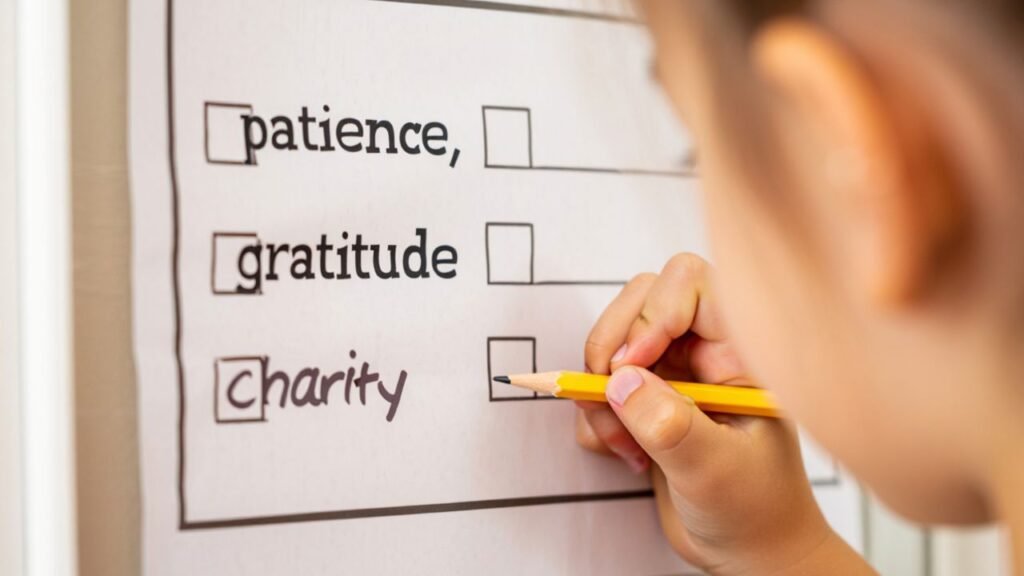
Rebuilding your identity isn’t about changing how you look or performing a version of yourself that others will admire.
It’s about developing the inner structure that guides your thoughts, choices, and actions.
In other words, it’s rebuilding your character.
It’s also about shaping the person you want to be at your core, so your life naturally reflects who you are becoming.
However, it’s important to realize that this process is deliberate, reflective, and ongoing.
It requires patience, self-awareness, and courage to face the parts of yourself that no longer fit.
If you are ready to rebuild your identity healthily, here’s how to approach it deeply and intentionally.
Identify Who You Want to Become
Start by defining the qualities and principles that will guide your life.
Note that this is more than external labels or achievements.
Discern who you want to be when no one is watching.
Your statements can be simple yet powerful affirmations like, “I am someone who protects my peace.” or something like, “I am someone who communicates clearly.”
These declarations will act as your compass.
They will clarify which actions, choices, and boundaries support the person you want to become.
They will also create a mental framework that anchors your identity in intention rather than circumstance.
Choose Identity-Based Habits
Next is to choose your identity-based habits.
Identity is formed through repeated, consistent action.
And those small habits act as proof of the person you are shaping.
For instance, choosing routines, behaviors, and practices that align with your desired identity gradually reinforces it from the inside out.
These habits are evidence that your internal narrative is changing.
Over time, these small actions accumulate, which makes the new version of yourself tangible and believable.
Learn to Act Like Your Future Self
Learning to act like your future self means trying on new ways of being and noticing how they resonate with the person you’re becoming.
That’s why, in the process of rebuilding your identity, it will force you to live differently, even before it feels natural.
Some actions will feel smooth and authentic.
Others may feel awkward or even uncomfortable.
And again… all these are part of the process.
These moments are signals that show which parts of your emerging self are ready to take root and which need more time to grow.
The key here is mindful awareness.
It’s necessary to pause regularly to notice what feels aligned and what feels forced.
Also, adjust your choices, behaviors, and boundaries based on that awareness.
Remember that identity transformation isn’t a straight path.
It’s a series of experiments, refinements, and discoveries.
And each one slowly shaping a self that feels genuine from the inside out.
Ultimately, this practice will allow you to explore and inhabit the version of yourself that already exists beneath the surface.
Over time, your actions, decisions, and values reflect the character you’re cultivating.
Reflect and Adjust Along the Way
The journey of identity rebuilding is dynamic.
As you build a new sense of self, it’s natural to feel that some things fit while others don’t.
That’s why you must continually reflect on your experiences and adjust accordingly.
This reflection allows you to notice subtle shifts in your priorities, your values, and the way you respond to the world.
In the adjustment process, you will be able to integrate new insights and let go of patterns that no longer resonate.
Each insight and each small recalibration strengthen your connection to your inner compass and keep your growth grounded in reality instead of aspiration alone.
Most importantly, it guarantees that your identity grows organically, rather than being imposed or performed.
Surround Yourself with Supportive People
The people around you profoundly influence who you become.
Relationships can either reinforce the identity you’re building or pull you back toward old patterns that no longer serve you.
That’s why it’s necessary and important to seek connections that naturally reflect the values, boundaries, and qualities you aspire to embody.
These relationships will act as mirrors.
They will show you a glimpse of the self you’re cultivating and will offer encouragement as you grow.
At the same time, protect your inner world by creating distance from relationships or environments that trigger old behaviors, doubts, or limitations.
Surrounding yourself with support will let you create a space for your emerging identity to thrive without distraction or compromise.
Honor the Parts of Yourself You’re Leaving Behind
Rebuilding your identity doesn’t mean erasing the past.
Every habit, belief, and role you once held played a part in shaping the foundation of who you are today.
So, acknowledging these aspects with compassion, you will be able to release them without shame or regret.
Recognize the lessons, the resilience, and the wisdom gained along the way.
Respect the journey you’ve traveled and permit yourself to grow into the person you’re meant to become.
Remember that letting go is an intentional step toward aligning with the values and character of your evolving self.
By honoring your past while stepping into your new identity, you can create continuity rather than rupture.
Celebrate Small Wins
Identity transformation doesn’t happen in leaps.
It unfolds quietly, through countless small choices that affirm who you are becoming.
And recognizing these moments reinforces the connection between your actions and your emerging self.
So celebrate your progress.
No matter how subtle, nurture the confidence and patience.
By doing so, it will remind you that each deliberate step, like setting a boundary, speaking your truth, or choosing a value-aligned action, is meaningful.
Each moment of alignment is evidence that your inner self is shifting
Growth is cumulative, and honoring these small victories builds momentum.
It makes the process sustainable and deeply satisfying.
5 Mistakes People Make During Identity Shifts
When your sense of self is in flux, it’s easy to misstep.
In this vulnerable space, decisions that feel urgent or necessary can actually derail growth.
Awareness of these common mistakes allows you to move through this period with more clarity and patience.
Most importantly, it gives you the chance to honor the process, rather than fight it, and to protect the fragile work of building a new, authentic identity.
Rushing the Transformation
Remember that transformation is not a sprint.
So pushing yourself to “arrive” at your new self too quickly can lead to superficial changes or inner tension.
When you rush, you risk bypassing the subtle, internal adjustments that make growth sustainable.
True identity work is gradual.
It unfolds in quiet shifts, in repeated reflection, and in small decisions that eventually reshape your character.
Pressuring yourself to change faster than your inner world can keep up creates frustration, doubt, and disconnection from your authentic self.
Cutting Everyone Off Impulsively
It’s tempting to sever ties with anyone who feels incompatible with the emerging you.
But cutting off relationships without thought can isolate you from important feedback, perspective, and support.
Growth thrives in balance.
Some relationships may need boundaries or distance, but impulsively eliminating connections can leave you without grounding.
It also blinds you to the lessons others may still offer.
Rather than reactive separation, you may practice mindful discernment.
This approach ensures your relationships support your evolution without creating unnecessary loneliness.
Confusing Healing with Isolation
Healing can feel like stepping back from the world.
That withdrawal often seems necessary to process change.
But retreating too far can blur the line between reflection and detachment.
It also slows down the formation of a new, integrated self.
True growth doesn’t happen in a vacuum.
It requires engaging with the world in ways that challenge old patterns, test new boundaries, and reveal the emerging contours of your identity.
Yes, isolation may feel safe, but it can also create a false sense of progress.
For example, you may think that you are protecting yourself from discomfort rather than guiding you toward transformation.
The key is balance.
Honor your need for introspection while remaining open to the world’s feedback and experiences.
Growth emerges when your inner shifts meet the external world, allowing your evolving self to be tested, refined, and solidified.
Trying to Reinvent Yourself for Validation
When the urge to redefine yourself comes from a need for approval or admiration, the process loses its depth and stability.
Changes rooted in external validation are fragile.
They can crumble under scrutiny or when praise fades.
Identity work becomes a performance, rather than an authentic unfolding of who you truly are.
True transformation is built on internal guidance.
Your emerging self must grow from your own values, priorities, and sense of integrity.
Each choice, boundary, and behavior should resonate with your inner compass, not someone else’s expectations.
Short-term recognition may feel satisfying.
But lasting change comes from alignment with yourself. Not applause from others.
Forcing Positivity While Ignoring Grief
Identity shift during personal growth carries loss.
Parts of your old self must fade for the new self to take root.
That’s why common to feel pressure to remain optimistic during transformation.
But denying grief and discomfort prevents real integration.
Trying to rush past grief or insist on constant optimism can disrupt this process.
Growth often requires mourning the parts of yourself that are leaving and acknowledging what was lost.
Forcing positivity too soon can mask emotions that need attention.
It also creates unresolved tension that seeps into your thoughts, decisions, and habits.
Honest reflection, emotional acceptance, and compassionate acknowledgment of loss allow your new identity to take shape on a solid foundation rather than a fragile façade.
This Version of You Is Worth Meeting
Identity shifts are not a detour or a setback.
They are a natural part of personal growth.
Throughout this journey, you’ve explored why your old self feels like it’s slipping away, why that in-between space can feel unsettling, and how to rebuild your identity with care, intention, and authenticity.
It’s normal to feel lost, uncertain, or even uncomfortable.
These feelings are not signs that something is wrong.
Instead, they are evidence that your inner world is evolving and is making room for a deeper, truer version of yourself.
These are also clear signs that you are searching meaning in life.
When you are in this transition, be patient with yourself.
Change of this depth cannot be rushed.
The small, deliberate steps you take now are laying the foundation for lasting transformation.
Also, remember that the person emerging from this process is not defined by old patterns, external expectations, or fleeting comfort.
This is a self shaped by reflection, resilience, and conscious choice.
It’s a version of you that is ready to live fully, act with integrity, and embrace life on your terms.
The one you’re becoming is worth meeting.
And when you finally step into this self, you will recognize something remarkable: the courage it took to let go, the wisdom gained from the in-between, and the strength of a person who has learned to grow without losing their essence.
So step into this version of yourself gently, and you’ll discover that who you are becoming has always been quietly waiting within you… braver, wiser, and more alive than you ever imagined.
PS: If this article resonates with you, keep coming back to Shine Brightly for more gentle reminders, grounded insights, and support along your personal growth journey.